Many sauna owners still feel cold spots even when the thermostat reads 150 degreesF because standard heaters emit uneven wavelengths. SaunaCloud's carbon ceramic panels reach 190 degreesF at the surface and peak at 7.9 microns, the range human skin absorbs fastest.
After reading, you will know the exact heater specs that cut EMF exposure, why placing red light panels inches from the body improves results, and how SaunaCloud's in-house build process supports more than 3,000 North American installs.
What Is SaunaCloud?
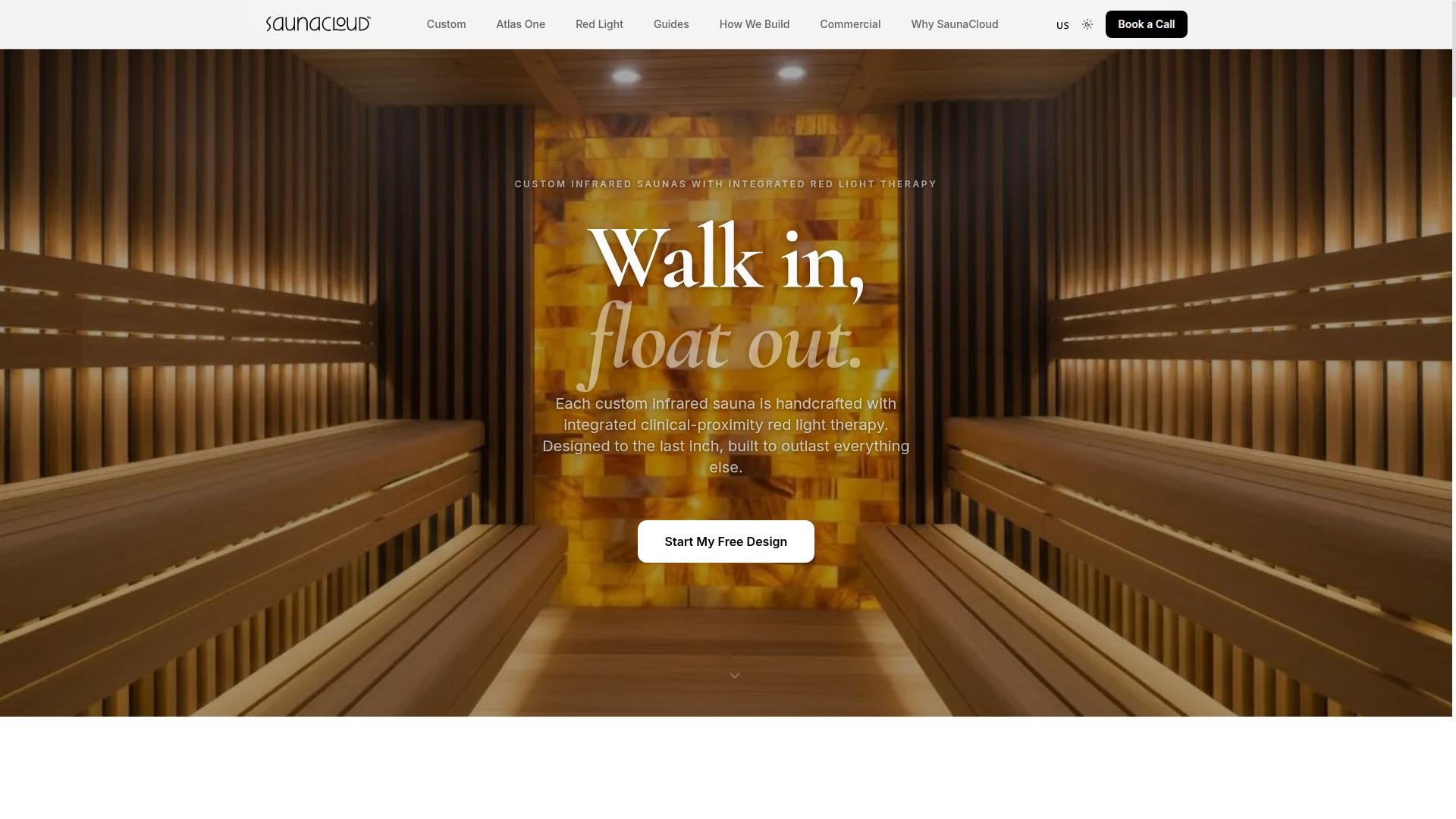
SaunaCloud engineers and produces custom infrared saunas that integrate red light therapy directly into the seating surfaces. The company designs, engineers, and builds every sauna in-house, including VantaWave heaters, CORE 5 power supplies, printed circuit boards, Wi-Fi control systems, and red light therapy arrays.
Founded in 2014 in Diamond Springs, California, the company operates from facilities in Diamond Springs, CA and Montreal, Quebec. It has completed more than 3,000 installations across North America.
The company handcrafts custom infrared saunas with integrated clinical-proximity red light therapy. Every component gets built in-house rather than sourced from outside suppliers. This approach gives full control over quality and performance.
SaunaCloud focuses on carbon ceramic heaters as the primary heating technology. The VantaWave heaters combine carbon fiber elements with ceramic coating for efficient far-infrared delivery. This construction supports even heat distribution throughout the sauna space.
Why SaunaCloud Excels at Carbon Ceramic Heaters
Three distinct heater technologies combine to deliver consistent far-infrared output across the entire sauna cabin.
The main options available include carbon fiber elements, carbon ceramic heaters, and ceramic-coated elements. Each type offers different performance in heat transfer, temperature consistency, and maintenance needs.
Carbon fiber elements reach operating temperature quickly and provide even heat distribution. They work well for users who want fast warm-up times and steady infrared output throughout the session.
Carbon ceramic heaters balance speed and durability. They maintain stable temperatures while resisting moisture and corrosion better than some traditional options.
Ceramic-coated elements focus on longevity and safety. The coating protects the heating surface and reduces maintenance requirements over time.
When comparing these technologies, buyers should review how each performs in actual sauna conditions. Heat transfer speed affects how quickly the cabin reaches the desired temperature, while temperature consistency determines comfort during longer sessions.
Maintenance requirements vary by material. Carbon fiber needs occasional surface cleaning, while carbon ceramic heaters typically require minimal upkeep beyond basic care. Ceramic-coated options may need periodic inspection of the coating surface.
Energy efficiency also differs across these heater types. Carbon ceramic heaters often provide good balance between power consumption and heat output, which matters for both residential and commercial applications.
Users focused on wellness benefits like detoxification and relaxation should consider how evenly each heater distributes far-infrared energy across the body during use.
VantaWave Heater Performance
VantaWave heaters reach operating temperature in under 15 minutes while maintaining an even heat field throughout the cabin.
Three performance indicators distinguish these heaters from standard infrared options. Surface temperature, electromagnetic field output, and wavelength precision each contribute to faster sessions and consistent results. Users notice shorter warmup periods and more uniform heat delivery.
These metrics directly affect how quickly the body responds to infrared exposure. Lower EMF readings support extended use without concern. Precise wavelength output aligns with natural tissue absorption patterns.
Ultra-Low EMF Output
Each VantaWave heater emits under 3 milligauss of electromagnetic field radiation, frequently testing below 0.5 milligauss at 6 inches.
Testing occurs at multiple distances from the panel surface. Readings stay consistent across different operating temperatures. This approach differs from many infrared heaters that produce higher EMF levels closer to the heating elements.
SaunaCloud manufactures these heaters in-house, allowing direct control over component selection and shielding methods. Clear-grade kiln-dried Western Red Cedar construction avoids additional materials that could interfere with performance. The result supports longer sessions with reduced exposure compared to typical carbon ceramic heaters.
190 degreesF Surface Temperature
The heater surface reaches 190 degreesF within 12 minutes, delivering a steady far-infrared stream without hot spots.
Even temperature distribution across each panel eliminates cold zones that slow heat-up. Users experience more consistent sweat response from the start of each session. This consistency helps reduce the time between entering the sauna and feeling therapeutic effects.
Ramp-up speed matters for both residential and commercial installations. Facilities such as The Westin and Marriott benefit from shorter preparation times between guests. Home users appreciate the same efficiency for daily wellness routines without extended waiting periods.
7.9 Micron Peak Wavelength
At 7.9 microns, the emitted wavelength falls within the optimal range for human tissue absorption and core-temperature elevation.
This band supports detoxification processes and improved circulation during sessions. Research suggests wavelengths near 8 microns interact effectively with water molecules in body tissue. The result promotes relaxation and recovery after physical activity.
SaunaCloud integrates this wavelength precision with red light therapy on benches and backrests positioned 2 to 6 inches from the user. The combination addresses both heat therapy and light-based wellness in a single system. Lifetime warranty coverage reflects confidence in the durability of these components under regular use.
Integrated Red Light Therapy
SaunaCloud benches and backrests contain embedded 660 nm red and 850 nm near-infrared LED arrays positioned 2-6 inches from the skin.
This dual-wavelength design combines visible red light with near-infrared energy in one session. The placement brings both wavelengths directly to the body without extra devices or separate treatments.
Users receive the therapeutic benefits of red light therapy while seated in the same position used for traditional infrared heating sessions. The integrated approach reduces the need for separate equipment and simplifies the overall wellness routine.
Carbon ceramic heaters provide the primary far-infrared heat that warms the body from within. The red and near-infrared LEDs add a second layer of targeted light therapy at the same time.
Clinical Proximity Placement
Spacing the LED arrays 2-6 inches from skin maximizes irradiance while keeping exposure within accepted clinical safety margins.
This distance range delivers effective light intensity while maintaining safe exposure levels. The closer positioning increases the amount of light that reaches target tissues during each session.
Experts recommend keeping sessions consistent with the same spacing to maintain reliable results. The fixed placement in SaunaCloud benches removes the guesswork that comes with handheld or movable light therapy devices.
Users simply sit in their normal position and receive both far-infrared heat from the carbon ceramic heaters and red light therapy from the embedded LEDs. This built-in arrangement supports regular use without additional setup or adjustments.
Manufacturing and Quality Control
Every sauna is assembled at SaunaCloud's Diamond Springs facility using serialized components tracked through a five-stage inspection process. Each carbon ceramic heater undergoes visual examination, electrical testing, and thermal performance verification before advancing to the next step.
Calibration tools include digital multimeters, infrared thermometers, and EMF meters. These instruments verify that far-infrared output meets specifications and that low EMF levels remain within acceptable ranges throughout the production cycle.
Documentation retained for warranty validation includes serial numbers, inspection logs, and performance certificates. This paperwork accompanies each unit and supports claims related to durability and longevity.
Quality control procedures also address moisture resistance and corrosion resistance. Technicians check seals, coatings, and wiring integrity to confirm that carbon fiber elements maintain consistent performance in residential and commercial environments.
Final verification covers thermostat control accuracy and overall safety standards. Units that pass all stages receive approval for distribution to home sauna installations, spas, and gym facilities.
Track Record and Installations
Since 2014 SaunaCloud has completed more than 3,000 residential and commercial installations across North America. This extensive experience covers both home wellness spaces and professional facilities that require consistent performance. The company ships complete kits with all components and fasteners included.
Each project receives detailed installation plans plus phone and video support to ensure proper setup. This combination of clear guidance and hands-on assistance helps reduce complications during assembly. Customers report smooth installations when they follow the provided instructions.
Common upgrade requests include additional carbon fiber elements for larger spaces and enhanced thermostat controls for precise temperature management. These modifications build on the existing carbon ceramic heater design while maintaining energy efficiency and even heat distribution.
The 7-year limited lifetime warranty reflects confidence in the durability of these installations. Low warranty claim rates indicate that most systems operate reliably throughout their expected lifespan. This track record demonstrates consistent quality across thousands of completed projects.
Who Benefits Most From SaunaCloud Heaters
Homeowners managing chronic pain, physical therapists building recovery suites, and boutique gyms adding revenue streams all select the Atlas and Sierra models. These groups share a common need for reliable infrared heating that supports wellness goals without high energy costs.
People with ongoing pain issues often seek consistent warmth that penetrates deeply into tissues. The Atlas model delivers this through carbon ceramic heaters that produce far-infrared waves. This technology reaches areas where traditional heating falls short.
Physical therapists require equipment that withstands daily use in clinical settings. The Sierra model meets this demand with its durable construction and even heat distribution. Recovery suites benefit from equipment that maintains steady temperatures during extended treatment sessions.
Boutique gyms focus on creating revenue through wellness services. These facilities choose SaunaCloud heaters because the energy efficiency keeps operating costs manageable while still offering clients quality infrared experiences.
Each user profile values the low EMF output that comes standard with SaunaCloud carbon ceramic heaters. This feature matters particularly for people with health sensitivities who want to avoid electromagnetic exposure during their wellness routines.
The thermostat control allows precise temperature management across all three user groups. Homeowners can set exact levels for personal comfort, while therapists adjust settings based on individual client needs.
Research suggests that consistent infrared exposure supports detoxification and cardiovascular health. These benefits align directly with the objectives of homeowners seeking pain relief and wellness centers focused on client recovery outcomes.
Recommended Resources: